Why Your Yard Floods, And What a Proper Drainage System Does to Help
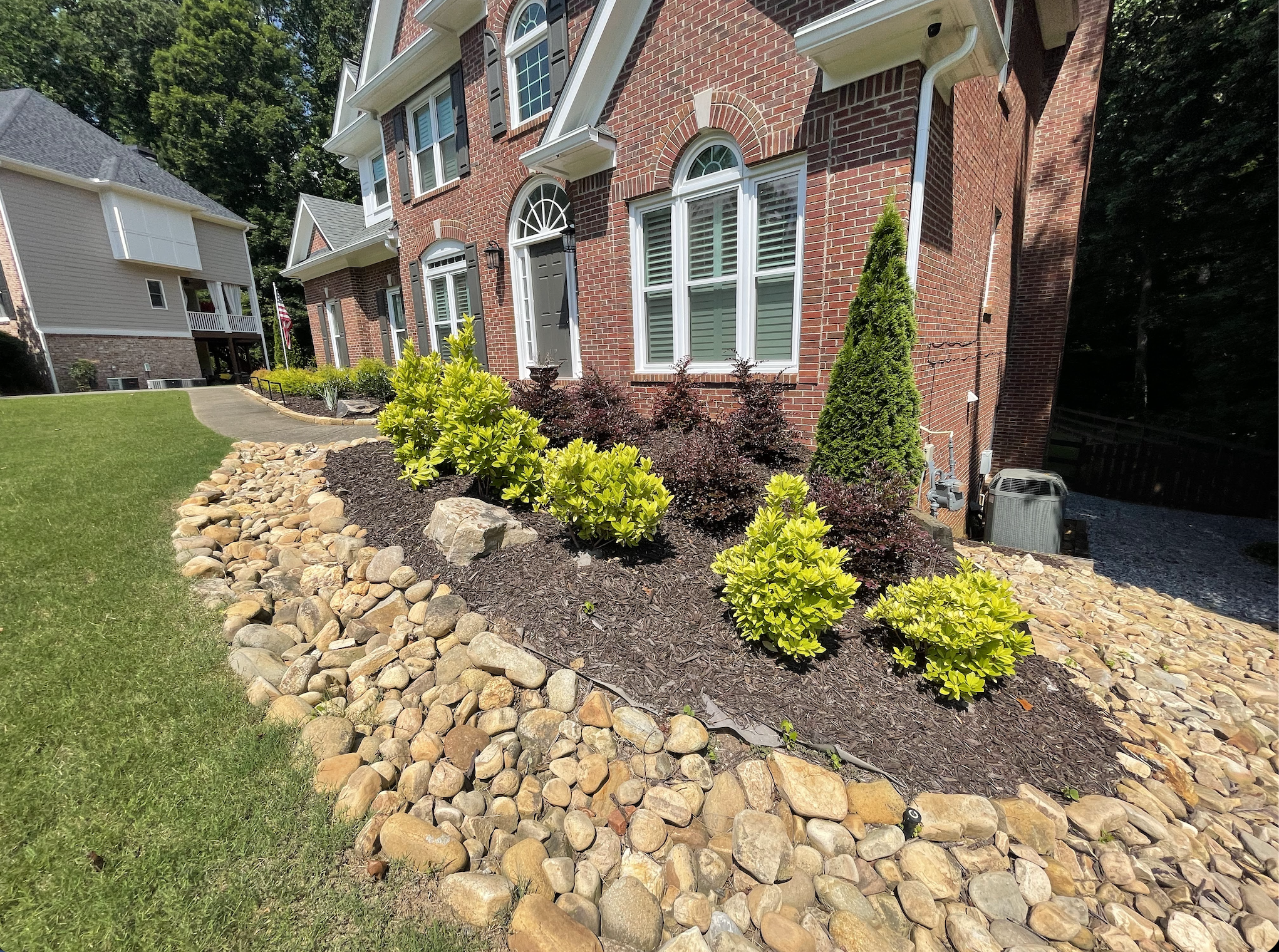
Georgia typically doesn't ease into a rainstorm. When it comes, it comes hard and fast, and your yard either handles it or it doesn't.
If you're a homeowner in Woodstock, you've probably watched water carve channels through your lawn or sit in low spots long after the rain stops.
On top of being an eyesore, that kind of water movement causes real damage over time to your soil, plantings, hardscaping, and in serious cases, your home's foundation.
The good news is that drainage problems aren't a mystery. They have identifiable causes and reliable solutions. What most properties are missing is simply a plan to prevent these issues from occurring in the first place.
The Real Reason Your Yard Can't Handle a Heavy Rain
Every drainage problem starts with grade, which is just the slope and contour of your land. When a yard is graded well, water moves away from your home and toward areas where it can safely disperse.
When it isn't, water follows the path of least resistance. That path often runs toward your foundation, across your patio, or worse, into your basement.
Soil composition plays into this too. Clay-heavy soil, which is common throughout the Atlanta metro area, absorbs water slowly. During a heavy rain, the surface becomes saturated quickly and runoff increases dramatically. That first flush of water is often where most of the damage happens.
Before recommending any solution, we assess how water is actually moving across a property. Sometimes the fix is simpler than expected. A grading adjustment or a targeted surface drain can resolve what looked like a major problem. Other situations call for something more comprehensive.
Related: From Plantings to Walkways: Complete Landscape Design & Landscaping in Alpharetta, GA
Matching the Solution to What Your Yard Is Doing
Let’s cover French drains and dry creek beds so you understand what problems each are designed to tackle.
A French drain is one of the most effective tools in residential drainage. It's a gravel-filled trench with a perforated pipe running through it, installed below grade to intercept groundwater and redirect it away from problem areas. It works quietly, it's largely invisible once installed, and it handles the kind of persistent saturation that surface solutions can't reach.
We've installed French drains for clients in Woodstock whose backyards were essentially unusable for days after any meaningful rain. Once the system was in, the yard drained within hours.
Dry creek beds solve a completely different problem. Where water flows across the surface in concentrated channels (often creating erosion along the way), a dry creek bed gives it a defined, controlled path.
Built with natural stone and gravel, these features redirect runoff while adding genuine visual character to the landscape, so they look like they belong. During dry periods, they read as a designed landscape element, and during rain, they do their job.
Both solutions work best when they're part of a broader drainage plan rather than a standalone fix. That's why the design conversation always comes before the installation.
One Conversation Could Change How Your Yard Handles Every Storm
A well-designed drainage system protects your property, but it also gives you your yard back. The spaces that flooded become usable again, and the landscape you invested in stays intact through whatever Georgia's weather decides to throw at it.
If water management has been a recurring source of frustration on your property, we'd love to take a look at what's driving it.
Get in touch with O'Neill Landscape Group, and let's figure out the right plan for your property.
Related: Why Thoughtful Landscape Design Works for Alpharetta, GA, & East Cobb, GA, Homes