
Gas or Wood: What a Fire Pit Contractor in Woodstock, GA Asks First
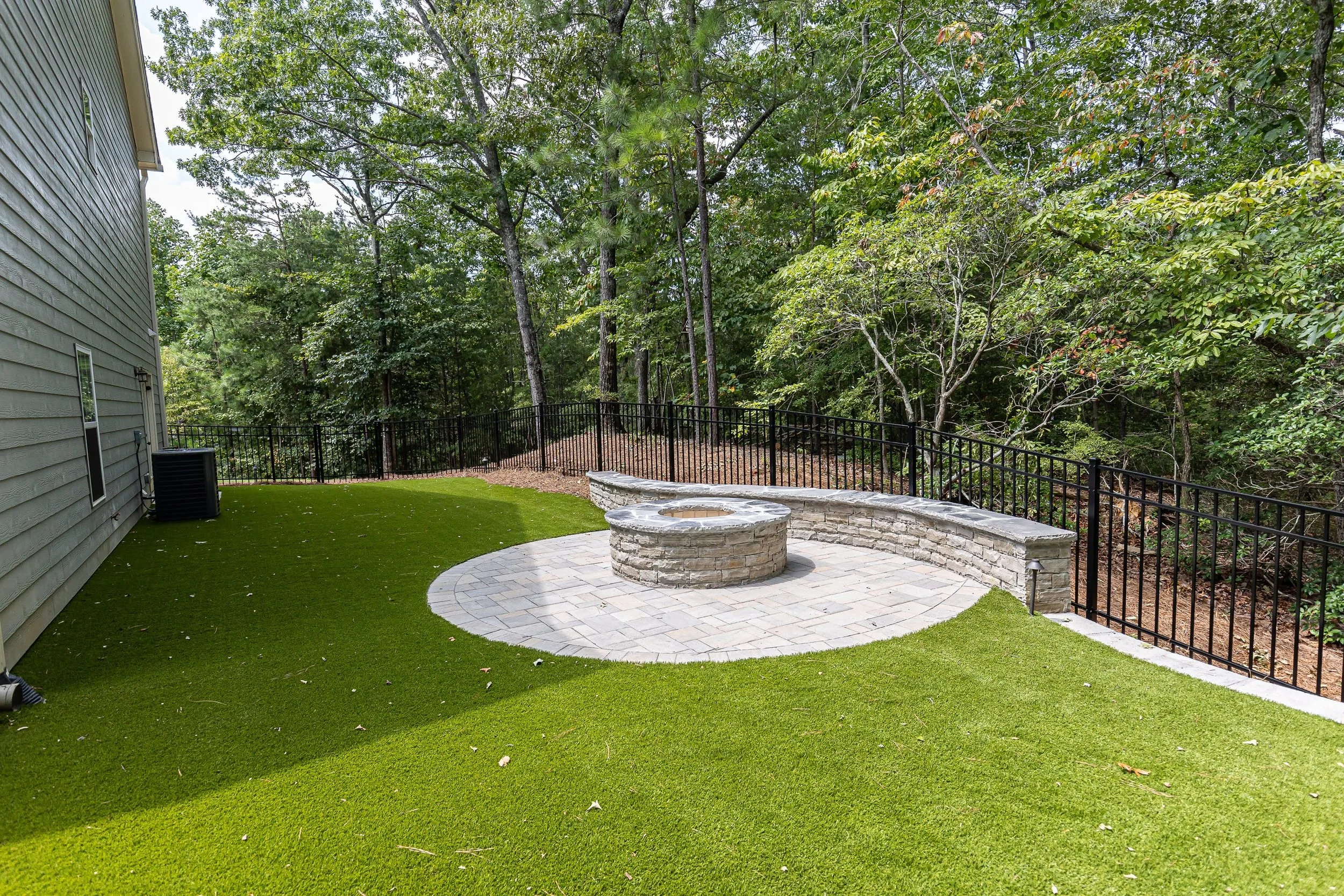
Gas or wood is the first question a fire pit contractor in Woodstock, GA should put to you, because the answer changes the construction, the siting and the cost before any stone gets chosen.
A fire pit is rarely a standalone purchase in practice. It arrives with a patio around it, seating against it and a route to it, and those elements get designed together or they get rebuilt later.
O’Neill Landscape Group has designed and built outdoor spaces across North Georgia since 2007, when founder Andrew O’Neill, a University of Georgia-trained landscape architect, started the company.
That design background is why we draw a fire feature as part of a space rather than as an object set down in a lawn, and why the fuel question comes early.
Related: Landscape Design Services in Woodstock, GA: Why a Trained Designer Changes the Outcome
What Changes Between a Gas and a Wood-Burning Fire Pit?
Gas and wood differ in how the fire starts, how much smoke it makes and what has to be built to feed it.
Gas lights instantly, produces a controlled flame and makes no smoke, which matters on a covered or partially enclosed patio. It needs a gas line run to the location and a burner assembly sized to the bowl.
Wood produces more heat and the smell people associate with a fire, and it needs nothing but a supply of split hardwood. Smoke is the practical divider.
On a tight lot with close neighbors, a gas fire pit tends to get used far more often, and a fire feature that gets used is the one worth building.
Which Masonry Materials Suit a Fire Pit?
Natural stone, masonry block and brick all suit a fire pit, and each is built differently. Natural stone gives irregular coursing and a heavier look.
Masonry block produces a consistent circle and a tighter joint. Brick reads more formal and tends to suit houses that already use it.
Whatever the facing, the inner wall is firebrick or a steel liner. The cap is where stone selection shows most, and because it carries both the heat and the wear, it gets specified for both.
How Big Should a Residential Fire Pit Be?
Most residential fire pits work best with an interior of roughly three to three and a half feet, which typically puts the outside at four to five feet across.
Larger than that and the people opposite you are too far away to talk to. Smaller and the fire crowds the seating.
The depth of the bowl is the dimension people forget. Too shallow and a wood fire throws embers onto the surrounding paving. Too deep and the flame sits out of sight from a seated position, so the interior gets set against the fuel it is built for.
Wall height usually lands between 12 and 18 inches, near the low end of seat height, so the fire stays in view from a chair. Our fire pits and fireplaces get sized against the furniture that will surround them rather than to a catalog dimension.
Where Should a Fire Pit Sit Within a Patio?
A fire pit sits far enough from the house to meet clearance requirements and close enough to feel connected to it.
Prevailing wind matters for a wood-burning feature, because an evening breeze across a Cherokee County yard carries smoke in a predictable direction. It is worth knowing which one before the footing goes in.
Circulation is the quiet constraint. People need a route past the seating without walking between the fire and someone’s chair, and that routing decides the shape of the surrounding patio.
What Does a Seat Wall Add to a Fire Pit?
A seat wall gives a fire pit permanent seating around part of the circle. That removes the need to store furniture and keeps the arrangement looking considered when nobody is using it. It also holds grade where a patio meets a slope, which many Woodstock lots have.
A seat wall changes the build sequence too. It needs its own footing and ties into the patio base, so it gets laid out with the fire pit rather than added afterward. Retrofitting one into a finished patio means cutting the surface along its whole length.
Designing a Fire Feature Into Your Patio
If a fire pit is the thing prompting a backyard project, the conversation works better with the surrounding space on the table too. We look at how a fire feature fits the patio, the seating and the grade on your property, then design all three together.
Schedule a fire pit design consultation with O’Neill Landscape Group.
In Summary
Does a gas fire pit need a permit in Cherokee County?
The gas line work for a fire pit generally requires a permit, and the connection is made by a licensed gas professional. Requirements vary by jurisdiction, so they get confirmed during design rather than treated as an afterthought.
How far from the house should a fire pit be?
Ten feet is a common minimum for an open wood-burning feature, with more clearance under any overhang and local fire code taking precedence. Gas features follow clearance requirements set by the burner manufacturer.
Can a fire pit be added to an existing patio?
Adding a fire pit depends on the base beneath the existing surface. Because a fire pit is heavy and needs a footing, O’Neill Landscape Group usually opens a section of the patio and rebuilds it around the new feature.
Related: 6 Patio and Fire Pit Ideas That Elevate Outdoor Living in Milton, GA
